

Table of Contents
- What Makes Billet Interior Parts Worth It for Trucks
- Benefits of Billet Aluminum vs Plastic Interior Trim
- Top Billet Interior Parts for OBS Trucks (1988-1998)
- How to Install Billet Interior Parts on Your Truck
- Maintenance and Polishing Guide for Billet Aluminum
- Why American-Made Manufacturing Matters for Fitment and Quality
- Conclusion
Last Updated: August 16, 2026
What Makes Billet Interior Parts Worth It for Trucks
Plastic interior trim degrades under sun exposure, oils, and use. Billet interior parts replace aging plastic with solid, CNC machined aluminum components that look better, feel better, and outlast the truck itself.

At LG Billet USA, we machine, assemble, and package every component domestically, ensuring fitment tolerances are dialed in for specific model years rather than guessed at. Billet aluminum interior parts are precision-machined components made from solid aluminum stock, designed as direct OEM replacements for factory plastic trim. They drop into existing mounting points without drilling, cutting, or modification when built correctly for a specific application.
Solid aluminum doesn't crack under temperature cycling, doesn't yellow from UV exposure, and doesn't feel hollow when you grab it. For a truck that's been restored or is used daily, that tactile difference is immediately noticeable.
Benefits of Billet Aluminum vs Plastic Interior Trim
The benefits of billet aluminum over factory plastic come down to three things: material integrity, dimensional stability, and finish longevity. Plastic trim expands and contracts unevenly with temperature changes, loosening mounting tabs over time. Aluminum maintains its shape across a much wider temperature range, so the fit stays tight after years of use.
Solid aluminum resists wear patterns that make plastic look cheap fast. Areas around door handles, headlight knobs, and glove box buttons see repeated contact. Plastic scratches and develops a worn sheen. Anodized or polished aluminum develops a patina that many owners prefer to the original look. For restoration builds, a full set of billet pieces creates a cohesive aesthetic that photographs well and holds value when the truck changes hands.
Material Grade Comparison: 6061 vs 6063 Aluminum
Not all billet aluminum is the same material, and the grade matters for interior applications.
6061 aluminum is the more common choice for structural and high-stress applications. It offers higher tensile strength and machines cleanly, making it well-suited for components like door handle assemblies where the mechanism is integrated into the billet piece.
6063 aluminum is the architectural grade. It has slightly lower strength than 6061 but takes a finer surface finish, making it the preferred choice for decorative trim pieces where visual quality of the anodized or polished surface is the priority.
For most OBS truck interior applications, 6061 is the correct choice for door handles and lock assemblies. Smaller accent pieces can be machined from either grade without a meaningful performance difference.
| Part Type | Recommended Grade | Why |
|---|---|---|
| Door handle and lock assemblies | 6061 | Higher load tolerance, repeated mechanical use |
| Glove box buttons | 6061 or 6063 | Low stress, either grade performs |
| Headlight knobs | 6063 | Decorative, benefits from finer finish |
| Column tilt levers | 6061 | Mechanical use, needs structural integrity |
| Interior accent trim | 6063 | Surface finish quality is the priority |
Finish Options: Raw, Polished, and Anodized
Finish choice defines the maintenance commitment and suits different build styles.

Raw finish is the machined surface left as-cut, with visible tool marks giving an industrial look. Raw aluminum will oxidize over time, developing a matte gray patina. It requires the most maintenance to keep looking intentional rather than neglected.
Polished aluminum is buffed to a mirror or near-mirror shine. It's the classic billet look and pairs well with chrome exterior trim. Polished surfaces show fingerprints and water spots readily, requiring regular wiping.
Anodized aluminum has been electrochemically treated to create a hard oxide layer. Anodizing improves corrosion resistance significantly, locks in color options like black or silver, and reduces maintenance compared to polished aluminum. It's the most durable finish option for daily drivers.
Top Billet Interior Parts for OBS Trucks (1988-1998)
The OBS platform, covering 1988 through 1998 Chevy and GMC full-size trucks, is one of the most popular targets for billet interior upgrades. Factory plastic in high-contact areas is now 25 to 35 years old. Replacement with billet aluminum is practical restoration.
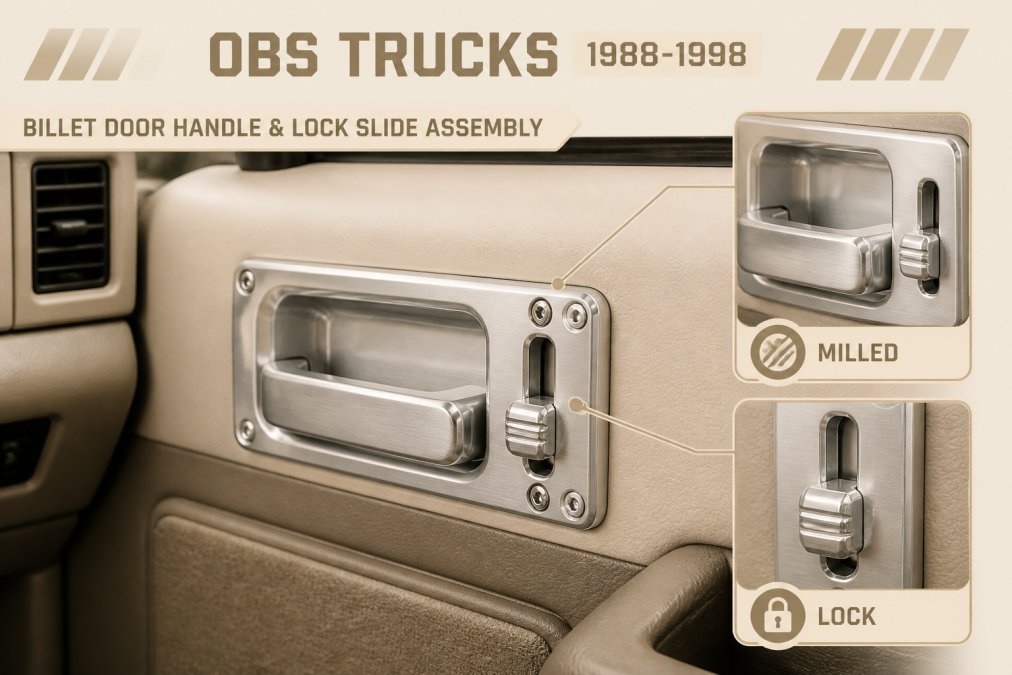
The OBS generation splits into two distinct interior configurations: 1988-1994 and 1995-1998. Parts are not interchangeable between these ranges, which is why model-year-specific fitment matters. According to GM Heritage Center vehicle production archives, the C/K platform underwent significant interior redesigns across this production run.
Door Handle and Lock Slide Assemblies
Door handles are the highest-contact interior component on any truck. Factory plastic assemblies crack at pivot points and develop slop in the lock slide mechanism after years of use. Billet assemblies solve both problems simultaneously.
LG Billet USA offers two model-year-specific assemblies:
- 1988-1994 Billet Interior Door Handle and Lock Slide Assembly, priced at $328.00, sold as a pair, machined and assembled domestically.
- 1995-1998 Billet Door Handle and Lock Slide Assembly, priced at $325.00, also sold as a complete pair.
Both assemblies are sold as complete pairs because replacing only one side creates a visible mismatch. The lock slide fails first on factory assemblies. A billet assembly that integrates both handle and slide into a single machined unit eliminates the weak plastic pivot that causes most factory failures.
Glove Box Button, Headlight Knob, and Column Tilt Lever
These three parts are the most overlooked billet upgrades and the most affordable entry points into a billet interior build.
The Billet Glove Box Button ($65.00) replaces the factory plastic button that operates the glove box latch. Installation requires no modification.

The Billet Headlight Knob ($30.00) presses onto the same shaft as the factory knob. At $30.00, it's the lowest-cost billet upgrade available and one of the most visible from the driver's seat.
The Billet Column Tilt Lever ($35.00) sits right at eye level when adjusting the steering column. The billet replacement adds a machined detail that elevates the surrounding area.
These three pieces together represent $130.00 in upgrades that change the feel of the entire driver's area without requiring specialized tools.
How to Install Billet Interior Parts on Your Truck
Installing billet interior parts on an OBS truck is straightforward for most components. Parts are designed as direct replacements, requiring removal, installation, and hardware tightening rather than fabrication or modification.
Installation Difficulty Ratings by Part Type
| Part | Difficulty | Estimated Time | Tools Required |
|---|---|---|---|
| Headlight knob | Beginner | 5 minutes | None (pull and press) |
| Column tilt lever | Beginner | 10 minutes | Flathead screwdriver |
| Glove box button | Beginner | 15 minutes | Flathead screwdriver |
| Door handle and lock slide assembly | Intermediate | 45-60 minutes per door | Panel removal tool, T20 Torx, flathead |
The door handle assembly is the most involved installation, but it's still within reach for anyone comfortable removing an interior door panel. The process follows these steps:
- Remove the door panel using a panel pop tool to release the retaining clips
- Disconnect the window switch wiring harness if present
- Locate the two Torx screws securing the factory door handle assembly
- Disconnect the lock rod from the factory lock slide before removing the assembly
- Position the billet assembly and secure with provided hardware
- Reconnect the lock rod to the new billet lock slide
- Test the handle and lock function before reinstalling the door panel
- Reinstall the door panel, pressing each clip firmly until it seats
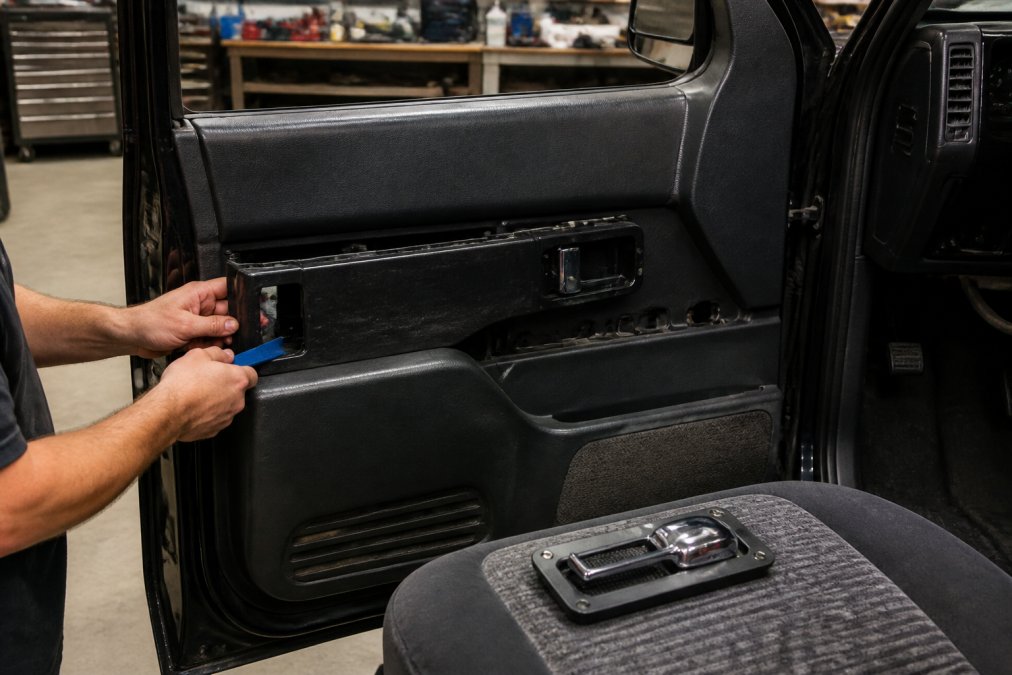
A common mistake is over-tightening the mounting screws on smaller billet pieces. Aluminum threads are cut to spec, but aluminum is softer than steel. Snug is correct. Torqued-down is how you strip a thread on a part you just paid for.
Maintenance and Polishing Guide for Billet Aluminum
Billet aluminum interior parts require less maintenance than most owners expect. The routine depends entirely on the finish you chose.
Anodized finishes are the lowest maintenance option. The anodized layer is hard and chemically resistant. Wipe with a damp microfiber cloth to remove dust and fingerprints. Avoid abrasive cleaners or polishing compounds, which will cut through the anodized layer. A light application of non-abrasive interior detailer every few months keeps the surface looking clean.
Polished aluminum needs more attention. Polished surfaces oxidize when exposed to air and moisture, dulling the shine over time. Weekly wiping with a clean microfiber removes fingerprints and oils. Monthly polishing with a dedicated aluminum polish applied in circular motions, then buffed to a shine, maintains the finish. Quarterly inspection for pitting or oxidation allows you to address issues before they deepen.
Raw finish aluminum requires the most active maintenance if you want to control the patina. Left alone, raw aluminum will oxidize to matte gray. If that's the intended look, no maintenance is required. A coat of clear aluminum sealant applied after cleaning will extend the raw look for several months between applications.
The interior environment is actually harsher than the exterior for aluminum. Hand oils are more corrosive to polished aluminum than road grime, and the enclosed cabin concentrates those oils on high-contact surfaces. Frequent light cleaning beats infrequent deep cleaning every time.
Why American-Made Manufacturing Matters for Fitment and Quality
The fitment question is the most common concern from buyers who've been burned by overseas parts that looked correct in photos but didn't align with mounting points on their specific truck.
American-made manufacturing matters for billet interior parts because quality control happens in the same facility where parts are designed and machined. When a dimension is off, it gets caught before the part ships. According to the Manufacturing Institute's workforce and quality standards research, domestic production facilities that handle both design and machining in-house maintain tighter dimensional tolerances than split supply chains.
For OBS truck applications, fitment tolerance is non-negotiable. The 1988-1994 and 1995-1998 interior configurations have different mounting geometries. A part machined to the wrong spec won't seat correctly. Domestically produced parts built from OEM-measured templates eliminate that risk.
LG Billet USA machines, assembles, and packages every part in the USA. Door handle assemblies for 1988-1994 trucks are not the same part as 1995-1998 assemblies, and both are built to match the exact mounting points of their respective model years.
American-made manufacturing also enables post-purchase support. When a part is designed and produced domestically, the manufacturer can answer specific technical questions about installation, fitment, and compatibility because the people answering those questions built the part.
Automotive-grade 6061 aluminum sourced domestically meets consistent material specifications. Imported aluminum sold as "automotive grade" varies widely in alloy composition, affecting machinability, finish quality, and long-term corrosion resistance. The structural integrity of a billet door handle assembly depends on the aluminum being exactly what it's specified to be.
Aging plastic interior trim is one of the most common complaints from OBS truck owners who've put serious work into their builds. The exterior looks sharp, the drivetrain is sorted, and then you open the door and the factory plastic reminds you what year it was assembled. LG Billet USA's billet interior parts solve that problem with CNC machined, domestically produced components built to fit specific model years without modification. The door handle assemblies, glove box button, headlight knob, and column tilt lever are all available with free shipping on every order. Get started with LG Billet USA and replace the plastic that's been letting your interior down.
Frequently Asked Questions
What are the most popular billet interior upgrades for OBS trucks?
Door handle and lock slide assemblies are the most-requested billet interior parts for OBS Chevy and GMC trucks, largely because the original plastic handles crack and fade over time. Other high-demand upgrades include the glove box button, headlight knob, and column tilt lever. These parts are direct OEM replacements, so they bolt on without modification and immediately improve the look and feel of a classic truck's cab.
Why is billet aluminum preferred over plastic for interior trim?
Billet aluminum holds up far better than plastic under daily use. Plastic interior trim becomes brittle with age, fades from UV exposure, and breaks under normal handling. CNC-machined solid aluminum does none of those things. It resists corrosion, keeps its finish for years, and adds structural integrity to contact points like door handles and knobs. For a truck that sees regular use, billet aluminum interior parts are a practical upgrade, not just an aesthetic one.
Are billet interior parts compatible with all truck models?
Compatibility depends on the specific part and model year. Most billet interior parts are engineered for specific platforms. For example, OBS Chevy and GMC C/K trucks split into two generations: 1988-1994 and 1995-1998, each requiring a different door handle assembly. Always verify the part number against your exact year and model before ordering. Quality American-made parts list exact fitment by year, so there is no guesswork about whether the piece will bolt up correctly.
How do you maintain and clean billet aluminum interior accessories?
For a raw or polished finish, wipe down billet aluminum parts regularly with a clean microfiber cloth to remove fingerprints and dust. Use a dedicated aluminum polish every few months to restore shine and remove light oxidation. Avoid abrasive cleaners or steel wool, which scratch the surface. Anodized billet parts require even less upkeep: mild soap and water is enough. Keeping moisture out of seams around installed hardware prevents any long-term corrosion.
How do I identify authentic American-made billet truck parts?
Look for manufacturers that specify where the parts are machined, assembled, and packaged, not just where the raw material comes from. Authentic American-made billet parts typically come with detailed fitment documentation, clear part numbers tied to specific model years, and direct customer support. If a listing lacks machining location details or shows generic product photos with no brand-specific hardware, the parts are likely sourced overseas and rebranded.
Will swapping plastic interior pieces for billet aluminum cause any electrical issues?
No, standard billet interior trim replacements do not affect your truck's electrical systems. Parts like door handles, knob replacements, and glove box buttons are mechanical components with no wiring connections. They replace plastic housings on a direct-fit basis. As long as you follow the install guide for your specific part and do not disturb any wiring harnesses during removal of the old trim, the swap is straightforward and electrically neutral.
This article was written using GrandRanker