

Table of Contents
- What Makes Quality Billet Parts Different
- Billet vs Cast vs Forged: Understanding Manufacturing Processes
- Visual Inspection: How to Spot Quality Billet Machining
- Material Verification: Aluminum Alloy Grade and Composition
- Billet vs Cast Aluminum Strength: Which Delivers Performance
- Is a Billet Steering Wheel for NBS Trucks Worth It
- Spotting Counterfeits and Verifying Authenticity
- Certification, Weldability, and Repairability
Last Updated: August 20, 2026
What Makes Quality Billet Parts Different
Quality billet parts represent a fundamentally different approach to manufacturing precision components. A quality billet part begins as a solid block of aluminum alloy (typically 6061-T6 for automotive applications), then is machined away to create the final component. This subtractive manufacturing method eliminates the grain structure inconsistencies and porosity issues that plague cast parts, resulting in superior material integrity.
At LG Billet USA, we focus on this precision manufacturing philosophy because it delivers measurable advantages in strength, durability, and appearance. Understanding what separates a genuine quality billet part from a poorly made alternative becomes essential to making the right investment.
Billet vs Cast vs Forged: Understanding Manufacturing Processes
Billet machining starts with solid aluminum alloy stock. A CNC machine removes material in precise increments, creating exact dimensional accuracy and consistent grain structure throughout. The material never experiences the heating and cooling cycles that weaken other methods.
Cast aluminum uses molten metal poured into molds. This method is fast and cost-effective but introduces inherent weaknesses. As the molten metal cools, shrinkage occurs unevenly, creating internal porosity and grain structure variations. These voids weaken the part under stress and make it prone to fatigue failure.
Forged aluminum involves heating solid metal and shaping it under extreme pressure. This process aligns grain structure along the direction of force, creating excellent strength in specific directions. However, forging is expensive and impractical for decorative or precision interior components.
For truck parts like door lock knobs, steering wheels, and interior trim pieces, billet machining consistently delivers the best combination of strength, precision, and appearance.

Visual Inspection: How to Spot Quality Billet Machining
The moment you hold a quality billet part, the difference becomes obvious. Visual inspection is your first line of defense against poor quality parts and counterfeits.
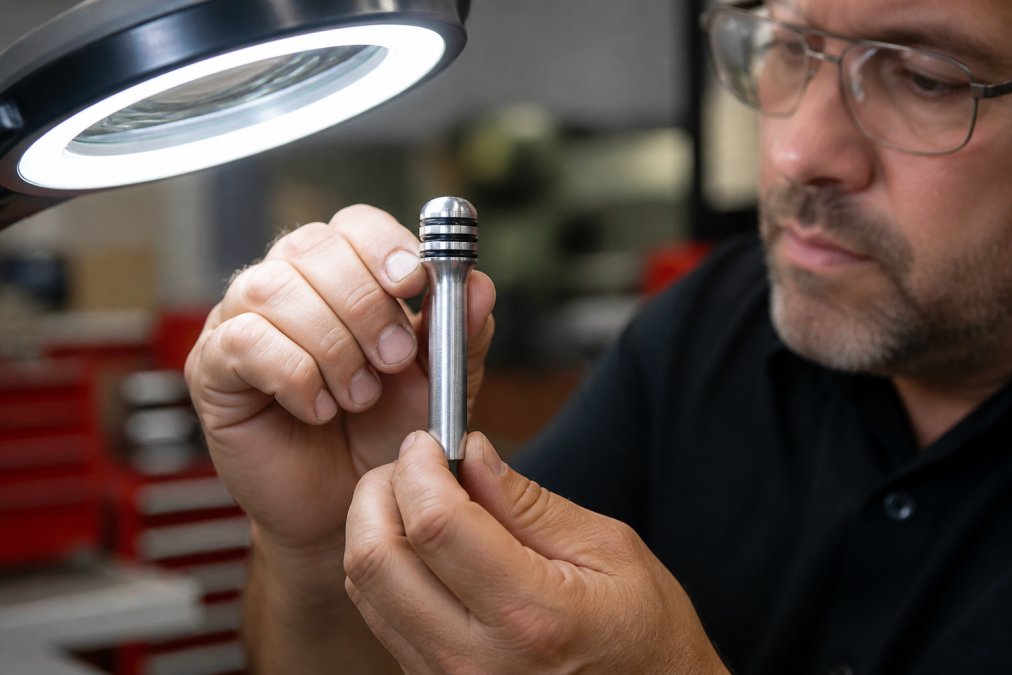
Start with surface finish. A quality billet part displays a consistent, smooth finish across all surfaces with no rough patches, inconsistent coloring, or visible defects. Run your hand across the part; it should feel smooth and refined.
Tooling marks tell you whether machining was controlled and precise. Quality parts show clean, consistent tooling marks indicating controlled CNC operations. Irregular or deep tooling marks suggest the machine wasn't properly calibrated.
Dimensional accuracy matters enormously for functional parts. Quality parts are machined to precise tolerances ensuring perfect fitment. Check for any signs of casting porosity, which appears as small holes or pits. Genuine billet parts won't have porosity because they're machined from solid stock.
Surface Finish and Anodizing Quality
Anodizing is the electrochemical process that protects aluminum from corrosion and provides color. Quality anodizing should be consistent in color and thickness across the entire component with uniform coloring and no dark spots.
The anodize layer on quality parts is thick enough to provide genuine protection. Run your finger across the anodized surface; it should feel smooth and slightly textured, not slippery or rough.
Tooling Marks and Dimensional Accuracy
Tooling marks on quality billet parts are fine, consistent, and evenly spaced, indicating optimal CNC machine operation. Coarse or irregular tooling marks suggest poor machining and potential dimensional accuracy issues.
Quality billet parts maintain tolerances within 0.005 inches or better on critical dimensions. Anything looser indicates either poor machining or a counterfeit part.
Material Verification: Aluminum Alloy Grade and Composition
The most common aluminum alloy for billet automotive parts is 6061-T6, which offers excellent balance of machinability, strength, and corrosion resistance. The "T6" designation indicates the material has been heat-treated to optimal hardness.
When evaluating quality billet parts, verify the aluminum alloy grade through documentation or markings on the part itself. Quality manufacturers clearly identify the material specification because it's a key quality indicator. If the seller can't tell you what aluminum alloy was used, that's a serious red flag.
6061-T6 aluminum offers tensile strength around 40,000 PSI, adequate for truck interior components and performance upgrades. The material composition affects not just strength but also machinability and surface finish quality.
Billet vs Cast Aluminum Strength: Which Delivers Performance
Billet aluminum parts are stronger than cast equivalents, but the difference varies by application. Cast aluminum can achieve similar ultimate tensile strength through heat treatment, but it lacks the material integrity that billet provides.
Cast parts contain porosity and grain structure inconsistencies that create stress concentration points. Under cyclic loading, these weak points become failure initiation sites. A billet part will outlast a cast part by a significant margin under real-world use.
For interior truck components like door lock knobs or steering wheels, the strength advantage of billet is less critical than durability and appearance benefits. However, the superior material integrity still matters, the part will maintain its finish and function longer without degradation.

Is a Billet Steering Wheel for NBS Trucks Worth It
Whether a billet steering wheel represents good value depends on your priorities. If you value appearance, feel, and premium components, a quality billet steering wheel delivers measurable benefits.
Billet steering wheels offer superior grip texture compared to stock wheels, which become slippery over time. The machined surface maintains its grip characteristics indefinitely. The weight distribution of a precision-machined billet wheel also feels more substantial and responsive.
The aesthetic upgrade is significant, transforming your truck's interior. Quality billet steering wheels typically cost more than aftermarket alternatives but less than upgrading multiple other components. For a truck you plan to keep and drive for years, the long-term value proposition is strong.
Spotting Counterfeits and Verifying Authenticity
Counterfeit billet parts are a genuine problem in the truck parts market. Scammers create cheap cast or plastic parts, apply anodizing, and market them as billet.
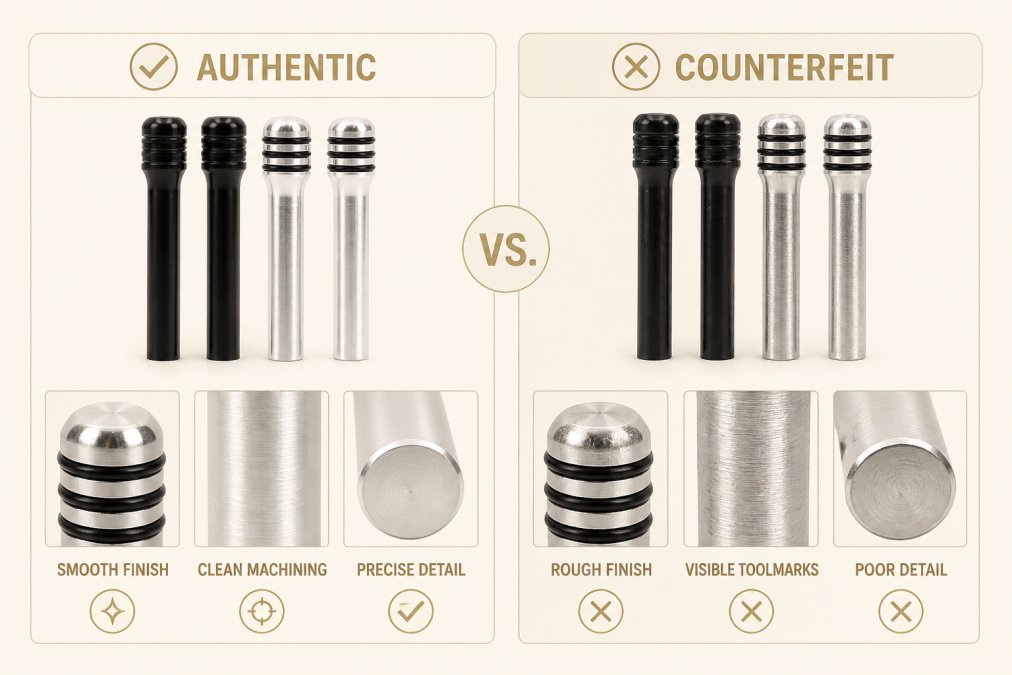
The weight test is your first verification method. Genuine billet aluminum parts have specific weight based on their volume and material density. Counterfeit parts made from plastic or inferior materials will feel noticeably lighter.
Examine the part under bright light with a magnifying glass if possible. Genuine billet parts show consistent, fine tooling marks and clean machining. Counterfeit parts show casting porosity, rough surfaces, or inconsistent finishing.
Verify the seller's credentials. Legitimate billet part manufacturers provide detailed product specifications, material certifications, and clear return policies. LG Billet USA clearly identifies that all parts are machined, assembled, and packaged in the USA, with free shipping on every order. This transparency indicates confidence in product quality.
Ask for material certifications. Quality manufacturers can provide documentation confirming the aluminum alloy grade and heat treatment. Check the fit and finish when the part arrives. Genuine billet parts fit properly without modification.
Certification, Weldability, and Repairability
Quality billet parts should meet or exceed industry standards for material composition and mechanical properties. 6061-T6 aluminum welds reasonably well, though the weld zone loses some heat-treatment hardness.
The repairability of quality billet parts is a significant advantage. If a part gets damaged, a skilled machinist can often repair it by re-machining the affected area. Cast parts are difficult to repair because the casting process can't be reversed.
This repairability factor extends the useful life of quality billet parts. A dent or minor damage doesn't necessarily mean replacement, it means repair.
| Quality Indicator | What to Look For | Red Flag |
|---|---|---|
| Surface Finish | Consistent, smooth, uniform color | Rough patches, uneven coloring, visible defects |
| Tooling Marks | Fine, consistent, evenly spaced | Coarse, irregular, or inconsistent marks |
| Anodizing | Uniform thickness and color | Dark spots, thin areas, chipping |
| Weight | Appropriate for size and material | Suspiciously light or hollow feeling |
| Fit | Installs without modification | Requires force, modification, or workarounds |
| Documentation | Material grade and specifications provided | Vague descriptions or no specifications |
| Seller Reputation | Clear policies, transparent practices | Low prices, vague descriptions, no certifications |
Evaluating quality billet parts requires understanding what separates genuine precision-machined components from cast imitations and counterfeits. The visual inspection techniques, material verification methods, and authentication checks covered here give you the knowledge to make confident purchasing decisions. When you invest in quality billet parts from LG Billet USA, whether it's precision door lock knobs, wheel center caps, or complete interior upgrades, you're getting components that are machined, assembled, and packaged in the USA with free shipping included.

Frequently Asked Questions
How can you visually distinguish quality billet parts from cast or counterfeit alternatives?
Quality billet parts show consistent surface finish with minimal tooling marks, sharp edges, and uniform anodizing. Cast parts display visible porosity, rough texture, and inconsistent grain structure. Counterfeits often have uneven machining, poor dimensional accuracy, and cheap anodizing that flakes or discolors. Authentic billet components from reputable manufacturers like LG Billet USA feature precision tolerance within 0.005 inches and professional-grade surface treatment that resists corrosion and wear.
What aluminum alloy grade should I look for in quality billet parts?
6061-T6 aluminum is the industry standard for billet automotive parts, offering excellent machinability, weldability, and tensile strength around 40,000 PSI. 7075-T6 provides higher strength (73,000 PSI) but is harder to machine and weld, making it less common for aesthetic upgrades. Check product specifications for alloy designation. Quality manufacturers clearly state their material composition and heat treatment. Avoid parts without documented alloy information, as this indicates either counterfeit stock or unknown material integrity.
Is a billet steering wheel for NBS trucks actually worth the investment?
A billet steering wheel for NBS trucks offers genuine benefits if you prioritize durability, precision fit, and aesthetics. Billet wheels provide superior dimensional accuracy compared to cast alternatives, reducing vibration and improving handling feel. They're worth it if you're building a high-performance daily driver or restoration project where reliability matters. However, if your truck is stock and you're budget-conscious, OEM steering wheels are adequate. The value depends on your build goals and how much you value the precision engineering and premium appearance that billet delivers.
What's the difference between billet and cast aluminum strength?
Billet aluminum is machined from solid stock, creating uniform grain structure and eliminating the porosity and voids inherent in cast parts. This results in superior tensile strength, better fatigue resistance, and more predictable mechanical properties. Cast aluminum contains micro-voids and inconsistent grain structure, making it weaker under stress and more prone to failure. For performance-critical components like suspension parts or steering components, billet's structural rigidity and stress concentration resistance make it the stronger choice. Cast works fine for non-structural aesthetic pieces.
This article was written using GrandRanker